
Wisdom teaches you before it.
Where the saying is right, and where it's dangerous
The idea is old. It's often traced to Julius Caesar, who wrote that experience is "the teacher of all things". And there's truth in it. A lesson you live through goes deeper than one you read. Nobody forgets the first time they were cheated, lied to, or let down.
But the saying hides two dangerous assumptions:
- That every lesson is worth its cost. Some aren't. Learning that fire burns by touching it is fine for a child's finger. It isn't fine for a house.
- That you get a second chance to use the lesson. In many areas of life, especially marriage, you may not. By the time experience has taught you, the choice has already been made.
An old saying, often credited to the statesman Otto von Bismarck, puts it more bluntly: "Only a fool learns from his own mistakes. The wise man learns from the mistakes of others." Scripture said it long before: "A prudent man foreseeth the evil, and hideth himself; but the simple pass on, and are punished" (Proverbs 22:3, KJV).
That's the real difference. Experience is learning after the pain. Wisdom is learning instead of the pain.
What learning the hard way really costs
In relationships, the "school fees" of experience are unusually high, because the lessons usually arrive after you're already committed. Here's what the same lesson costs, learnt two different ways:
| The lesson | The hard way | The wise way |
|---|---|---|
| Genotype | A child born with sickle cell because a paper from a business centre was trusted | One visit to a reputable lab together, both results collected the same day |
| Hidden debt | Loan apps calling your phone two weeks after the wedding | Swapping free credit reports before the introduction |
| An unserious man | Five years of "we'll see" and a heartbreak near 35 | Clear checkpoints that show within about 90 days whether he's serious |
| Family patterns | Discovering after marriage how his father treated his mother, and that he learnt it | One honest question, and watching how he handles anger |
| Money values | Fighting about money every month of your marriage | One calm conversation about earning, owing and family support |
| Your own blind spots | Repeating the same relationship pattern with three different people | An honest look in the mirror before the next one |
Look at the right-hand column. None of it is expensive. None of it is complicated. It's simply knowing what to look for before you need to know it. That's what insight is.
Why learning from others works
This isn't just a nice idea. It's how human beings are built to learn.
The psychologist Albert Bandura showed that people learn a huge amount by observing others: what they did, and what happened to them. He called it social learning, and it's why children copy parents, apprentices copy masters, and why one honest story from an older woman can save a younger woman years.
Researchers have also found a simple trick to borrow experience you haven't had yet. In a well-known study, imagining that an outcome has already happened, and then asking why, improved people's ability to identify the reasons by about 30%. Decision expert Gary Klein turned this into the "pre-mortem" (Harvard Business Review): before a big decision, picture it going wrong and list the reasons.
And in marriage specifically, knowledge protects. In a study of more than 3,000 married people, those who said they knew their spouse "very well" before marrying had about 44% lower risk of divorce (Economic Inquiry, 2015). We go deeper into this in 9 things to check before marriage.
5 ways to learn without the pain
Ask people who've already walked the road
Don't ask married couples "how is marriage?" You'll get "fine". Ask specific questions: "What do you wish you had checked before your wedding?" "What surprised you in the first year?" "What would you tell your younger self?" Their answers are experience you didn't have to pay for.
Do thisThis month, ask two couples you respect one of those questions. Write down what they say.
Run a pre-mortem on your relationship
Imagine it's five years from now and the relationship has failed. Ask yourself honestly: what went wrong? Money? His family? Faith? Something you saw early and ignored? Your mind already knows more than you've admitted. The pre-mortem gives it permission to speak.
Do thisWrite three reasons it could fail. Then ask: which of these can I check now?
Read with a pen, not just your eyes
Reading is borrowed experience, but only if it changes what you do. A workbook that makes you write your answers, mark your must-haves and face your red flags works far better than a book you finish and forget.
Do thisChoose one practical guide and finish it, with a pen, before your next big relationship decision.
Watch patterns, not promises
Anyone can promise. Patterns don't lie. How does he behave when he's broke, tired, told "no", or disappointed? How does she treat people who can do nothing for her? You learn more from three months of patterns than from three years of promises.
Do thisKeep a quiet note of what someone does, not what they say, for one month.
Decide your non-negotiables before emotions arrive
The worst time to decide what you'll accept is when you're already in love, or already under pressure. Write your must-haves and dealbreakers while your head is clear, so your heart can't quietly rewrite them later.
Do thisWrite five must-haves and five dealbreakers today. Keep the list where you'll see it.
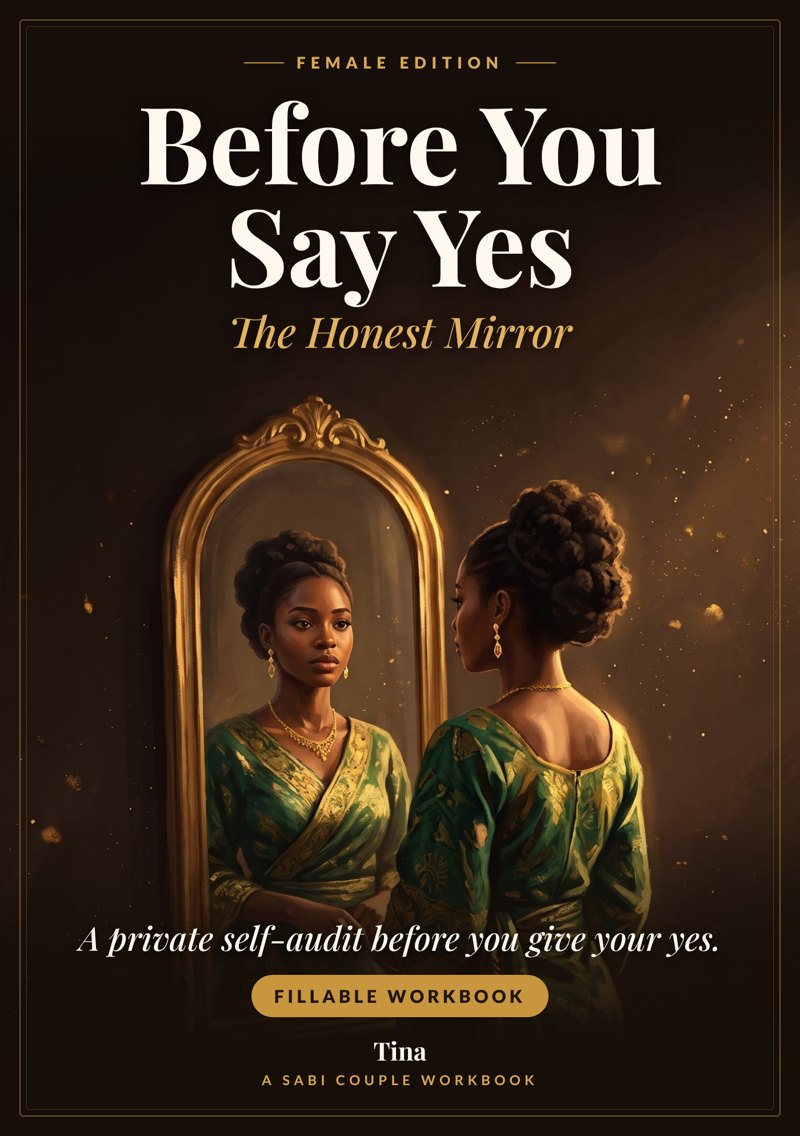
Want the wise-way checklist for marriage? Before You Say Yes: The Honest Mirror has 96 questions and the 9 hidden rooms most women only discover after the wedding.
See what's inside →How our guides put you steps ahead
We started Sabi Couple because we watched too many good people pay the highest school fees: the wrong marriage, years of waiting with no plan, families torn apart by things nobody checked. Most of those lessons were avoidable. They just weren't taught.
So we put the lessons into guides you can use on your phone: short, practical, with tools you fill in, not just read. Think of each one as borrowed experience: insight from other people's hard lessons, so you can walk into your decisions a few steps ahead.
Before You Say Yes: The Honest Mirror
Compare the man you want with the woman you honestly are, across 12 areas and 96 questions. Then open the 9 hidden rooms: fake genotype papers, hidden debt, the law, his father's house and more.
Get Before You Say Yes →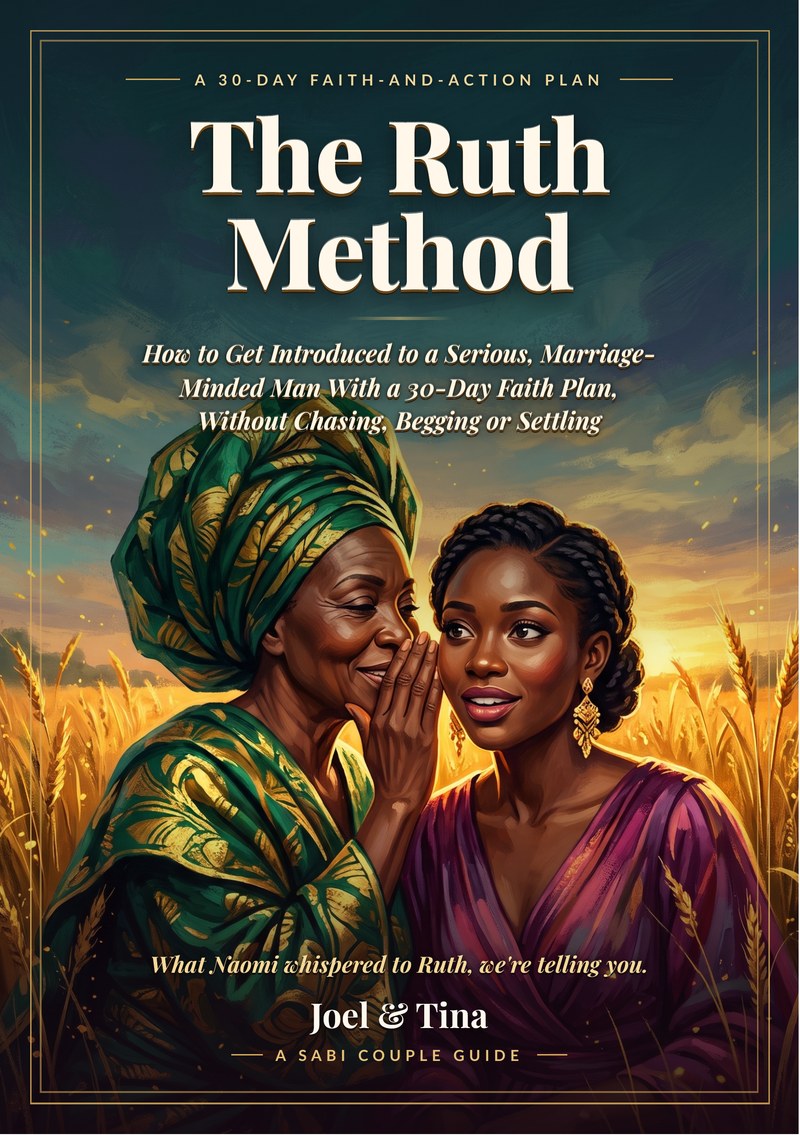
The Ruth Method
A 30-day faith-and-action plan to get introduced to a serious, marriage-minded man, without chasing, begging or settling. Includes word-for-word scripts and checkpoints to know within 90 days if he's serious.
Get The Ruth Method →Men: Before You Say Yes (Male Edition) is coming soon.
Each guide is ₦5,000, less than one aso ebi, and far less than the school fees of experience.
Frequently asked questions
Is experience really the best teacher?
Experience teaches deeply, but it isn't always the best teacher because its lessons can cost too much and often arrive too late to use. Learning from other people's experience, through honest conversations, good guides and careful observation, gives you the lesson without the pain.
What does "experience is the best teacher" mean?
It means the lessons we live through stay with us more strongly than lessons we're told. The saying is often traced to Julius Caesar, who called experience "the teacher of all things".
What is better than experience?
Wisdom: learning from the experience of others before you pay for it yourself. It's the difference between learning after the test and learning before it.
How can I learn from other people's mistakes?
Ask people who've been there specific questions, run a pre-mortem on big decisions, read practical guides with a pen, watch patterns instead of promises, and decide your non-negotiables before emotions arrive.
Which Sabi Couple guide should I start with?
If you're single and want to meet a serious, marriage-minded man, start with The Ruth Method. If you're dating or engaged, start with Before You Say Yes: The Honest Mirror.
The cheapest lesson is the one you don't have to live
Experience will always have something to teach you. Life makes sure of that. But you don't have to sign up for every lesson the hard way.
Ask the questions. Borrow the stories. Write down what matters before your feelings decide for you. And when it comes to the biggest decision of your life, walk in with your eyes open.
Choose to learn now, so life doesn't have to teach you later.
Get the insight before the experience
Before You Say Yes: The Honest Mirror: a private, fillable workbook with the questions to ask, the things to check, and the red flags to never ignore, before you say yes.
Launch price until 31 December.
Get Before You Say Yes →With love,
Joel & Tina
Sabi Couple
This article is for education. It isn't medical, legal or financial advice. If you're facing abuse or feel unsafe, please speak to someone you trust, or call 112 in an emergency.